
We love our pets in Southern Florida. Whether it’s a Golden Retriever who loves the beach or a cat who naps in the lanai sunbeams, our furry friends are part of the family. However, they also contribute significantly to the indoor air pollution of our homes. Even if you vacuum daily and groom your pets regularly, there is an invisible element that standard cleaning misses: pet dander.
In many parts of the country, homeowners open their windows in the spring and fall to “air out” the house. In Southern Florida, due to the intense heat and humidity, we live in a “closed envelope.” Our windows stay shut, and our AC runs almost 24/7. This means the air inside your home is recirculated hundreds of times a day. If that air is filled with dander, pollen, and dust mites, your HVAC system essentially becomes a high-powered distribution machine for allergens, blowing them into every bedroom and living space continuously.
The Sticky Science of Dander
Many people assume that pet allergies are caused by fur. In reality, the culprit is a protein found in the animal’s skin flakes (dander), saliva, and urine. These microscopic particles are incredibly light and jagged. Unlike heavy dust that settles on the floor quickly, dander floats in the air for hours.
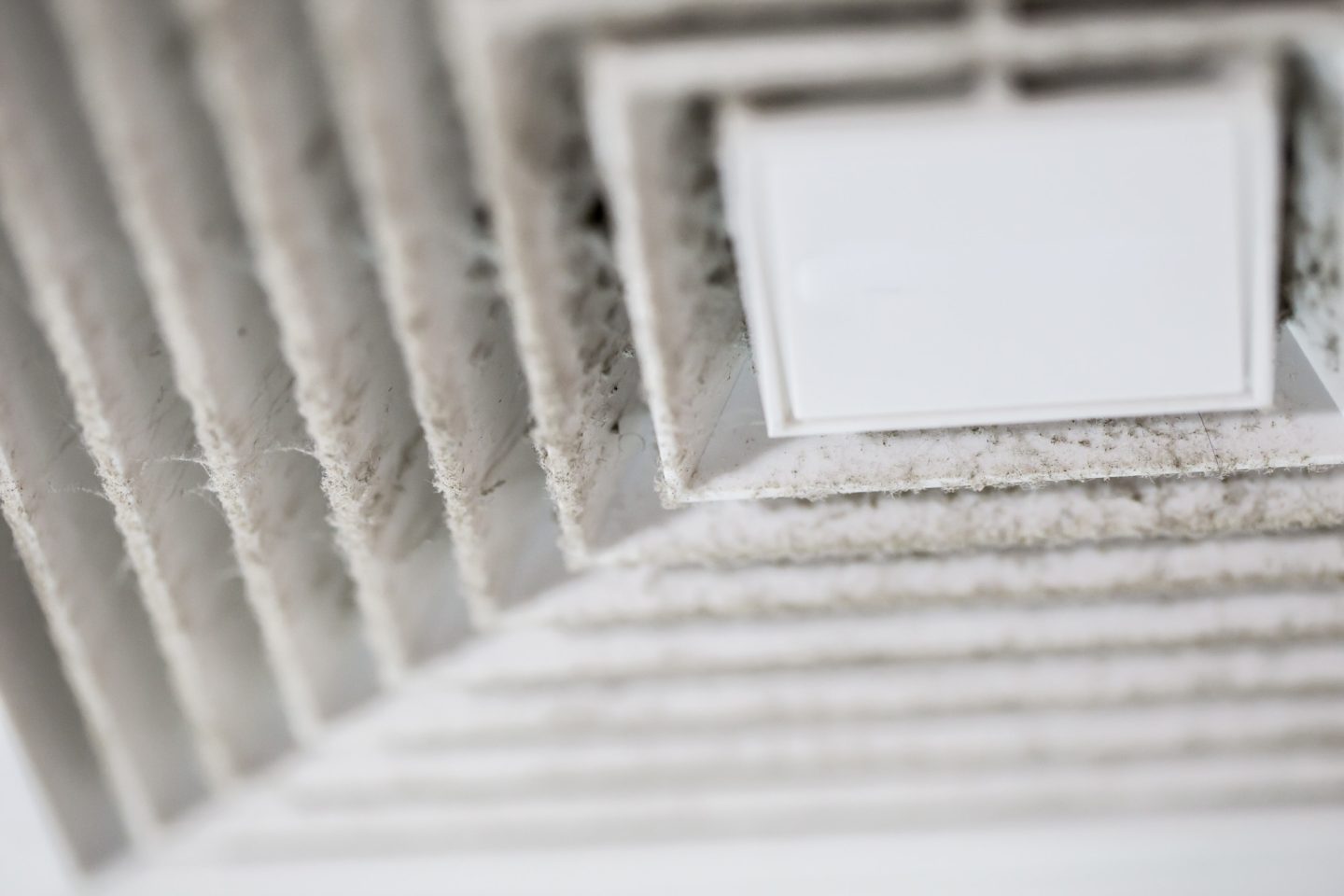
When your AC pulls air through the return vent, it sucks in this dander. Because the particles are often sticky, they adhere to the walls of your ductwork and the fins of your evaporator coil. Over years, this builds up into a thick layer of biological debris inside your ducts. This layer acts as a trap for other pollutants and can even become a food source for mold. The Asthma and Allergy Foundation of America (AAFA) notes that allergen levels in homes can remain high for months even after a pet is removed, simply because the dander is embedded in the home’s ventilation system.
The Filter Dilemma: Understanding MERV
Your first line of defense is your air filter. However, choosing the right filter is a balancing act. Filters are rated by their MERV (Minimum Efficiency Reporting Value). A standard fiberglass filter (MERV 1-4) is designed to protect the AC equipment from large debris, not to protect your lungs. It lets dander pass right through.
To capture pet allergens, you generally need a filter with a MERV rating of 8 to 11. However, you must be careful. If you put a hospital-grade HEPA filter (MERV 17+) in a standard residential unit, it might be too restrictive. It’s like trying to breathe through a straw; the system will struggle to pull air, leading to frozen coils and motor burnout. Consult with a professional to find the highest MERV rating your specific system can handle without sacrificing airflow. Technical standards from ASHRAE provide guidance on how filter efficiency impacts particle capture.
Hitting the Reset Button
If you have lived in your home for several years with pets, or if you moved into a home that previously housed pets, your ducts likely need a reset. Professional air duct cleaning is the only way to physically remove the accumulated dander “fur coat” lining your ventilation system.
This process involves source removal. We use high-powered vacuums connected to the trunk line to create negative pressure, ensuring that when we brush the ducts, the dust doesn’t blow back into your house. It is sucked safely out into a containment unit. For severe allergy sufferers, we can also apply an antimicrobial fogger to the ducts after cleaning to sanitize the surfaces.
Your Southern Florida Experts for Air Duct Cleaning
Love your pets, but lose the sneeze. We help you breathe easier by removing the hidden allergens trapped in your ventilation system. Using safe, negative-pressure technology, we ensure your home’s air is as clean as your floors. Trust Best Air Solutions to improve your indoor environment. Learn more about our Air Duct Cleaning process or book an appointment via our Contact Us link.